Una ruta cultural por la historia, las tradiciones, la gastronomía y la naturaleza de diez enclaves patrimoniales por el interior de Andalucía
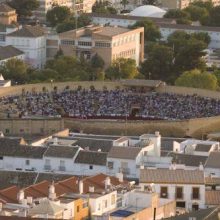
It was opened on 13 May 1904 and was built using ashlar from Osuna’s quarries. It is open to the public when there is a bullfight. It was opened on 13 May 1904 to hold bullfighting events, which were previously held in the town’s squares. Its architecture follows the design that was typical for that time: an arena, barrier and a space between the inner and outer barriers. It is supported by two concentric walls made of sandstone from the quarries and separated into eight sections, each with their own entrance. Halfway around the ring, in front of the bullpen, there is a vaulted and earthy tunnel reminiscent of the oval entrails of Italica’s amphitheatre. The arena, a circle of almost forty-eight metres in diameter, is one of the widest in Spain. The stands can seat 6500 people.
plaza de toros, Osuna
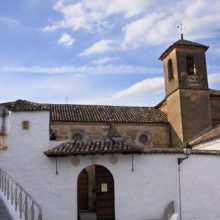
The San Juan museum is located within the San Juan church (16th and 17th century), found on calle Rosario. It houses the icon of Cristo de la Salud. This museum allows visitors to see interesting samples of Alcalá la Real’s religiosity, alongside elements that are characteristic of biblical diorama, such as “rostrillos” to give character to biblical figures, typical of Easter Week in Alcalá. Contact: Antonio Pérez Rosales.
Placeta San Juan, 4,Alcalá la Real
Tour company who offers local tours, experiences and educational workshops for groups and individuals. Both tours and workshops can be delivered in English and Spanish.
Avenida Castro del Rio, 1-2D, Baena
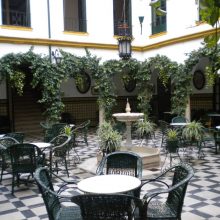
The ‘Casino’ or ‘Círculo de la Amistad’ is a former convent-hospital that belonged to the Brothers Hospitallers of Saint John of God Order and is annexed to the still functioning San Juan de Dios Baroque chapel. Many of Juan Valera’s characters would sit around debating the subject of the hour in its patio. We can find a fantastic description of it in his work Pepita Jiménez: “The centre of the concurrence was the patio, paved with marble, with a fountain in the centre, and many plant pots.” A painted tile in the patio commemorates the writer and while touring the house, we can admire paintings of his family. There is also a small museum on Costumbrismo, the artistic movement present in Valera’s works.
C/ Cervantes, 1,Cabra
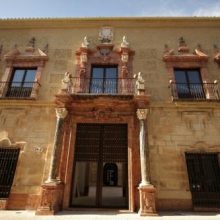
A magnificent jewel of the civil Baroque architecture of Cordoba. It has been recently restored and converted into a museum and Visitor Centre for the town of Lucena. It is a palace or manor house that belonged to illustrious local families. Two aspects stand out in particular: first, the façade, with its Baroque columns and entablatures, using veined marble from Cabra, which decorate the doors and windows on the two floors; second, in the interior, which is laid out around two arcaded courtyards, a Baroque staircase in one of the courtyards is decorated with 18th-century tiles from Seville. It is covered by a Rococo dome, with decorative plasterwork work depicting architectural motifs and noble coats of arms. As a result of the restoration work that ended in March 2011 a Roman sculpture of the god Cupid was discovered, together with a number of neoclassical murals. Its construction, promoted by Antonio Rafael de Mora and Saavedra, was started in 1730. One of the façades exudes its nobility, comprising two levels, one of ashlar stones and the other with masonry face. The first level has windows with sunken frames which and the second, balconies framed by pilasters and open pediments with ostentatious […]
C/ San Pedro, 42,Lucena
This building is not only one of the most grandiose of Cordoban baroque architecture, it is also one of the most original. Its oval-shaped floor plan and octagonal dome are really outstanding. Inside it boasts a spectacular altarpiece. Its a convent for Agustinian nuns. Baroque trail. 18th century.
Plaza Llanete de San Agustín,Lucena
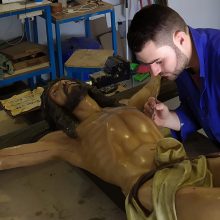
Jesús Richarte joined Seville School of Art in 2013, obtaining a degree in Applied Arts in Sculpture. He subsequently obtained knowledge in wood carving, polychromy and clay modelling from various workshops. In 2015, he set up his own workshop in Ecija where he began working on important imagery projects for Holy Week in different cities around Spain.
C/Cánovas del castillo 15-a (local), Écija
Productos Alimentarios Quesí is a family business which makes and sells 100% artisan goat’s cheese coming from its own livestock. This small family business controls its entire production process so it is able to guarantee the freshness of all of its cheeses and this is clearly reflected in its flavour and texture. Quesí was created in 2016 with a clear idea of a future project that finally came to fruition in 2019. After years testing, with their successes and failures, they have managed to remain firm and keep going with their initial project. * Tour of Gastronomic and Rural Experiences. 21, 22, 23, 28, 29, 30, October 2022. VISIT TO THE QUESÍ ARTISANAL CHEESE FACTORY. Guided visit and tasting. Reservations: (+34) 652252320 Price: € 10 per person.
Av. de Málaga 22, Osuna
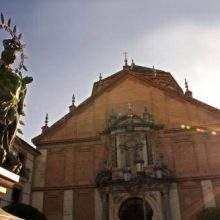
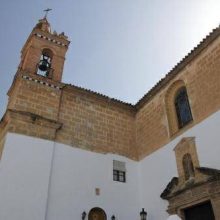
16th century construction. Currently Carmelite Father convent. The convent, donated by Juan Téllez Girón, was occupied by the Carmelite Order in 1606. It is thought that construction of the church began at the beginning of the 16th century, given that the unfinished east end includes Gothic and Renaissance elements. Later, during the 18th century, the naves and the portal were renovated. The interior of the church presents three naves mounted on pillars and covered with a vaulted ceiling.
C/ Carmen, 2, Osuna
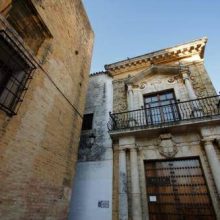
Marqués de las Torres palace is an example of Carmona’s 18th century palace architecture. It has an impressive portal, typical of Seville’s baroque period of the year 1700. It has two tiers: the lower tier has double Tuscan columns at each side of the door, which supports the upper balcony, framed by joint lonic columns and topped with an open triangular pediment on its decorative base. The construction’s date is inscribed over the monumental stone façade’s pediment: 1755, alongside the Quintanilla family’s coat of arms. Its extensive side façade is Late Baroque in style, and has an impressive 18th century styling with Islamic patterns that decorate the balconies’ put-log holes. The central patio has a square floor plan and the rooms are organised around it over two floors. The Interpretation centre and town museum are currently housed here. The museum displays a summary of the town’s history, from its origins to the present day. The exhibition is in chronological order and uses archaeological, ethnographic and artistic objects to narrate the town’s history pointing out its most important periods of time.
C/ San Ildefonso, 1,Carmona
 English
 Español
 Français
 Deutsch