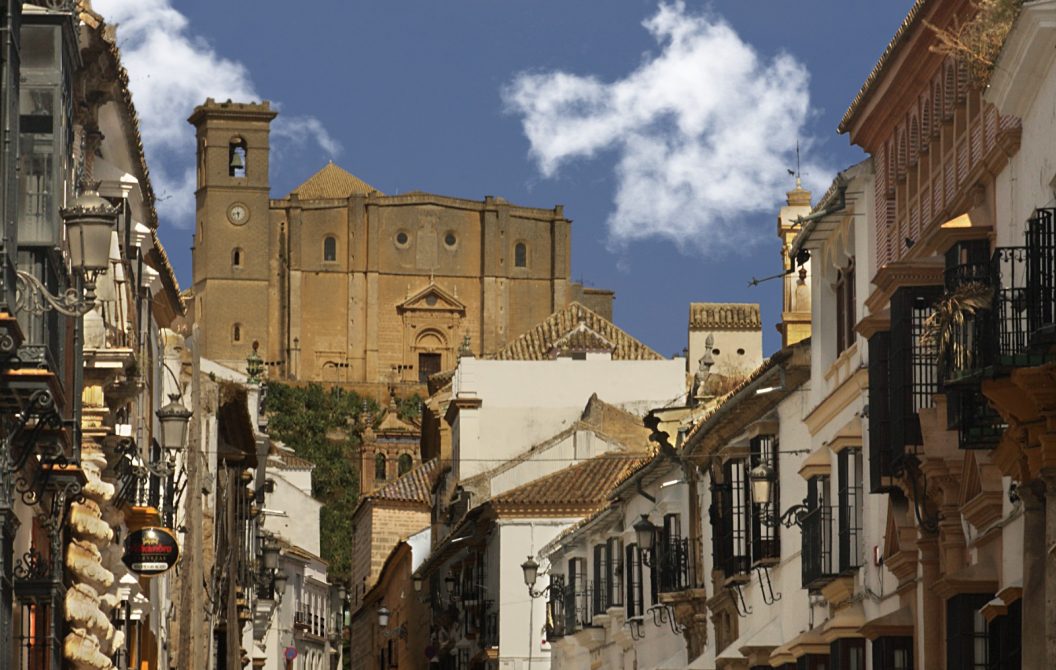
Parallel to the monumental and artistic San Pedro Street, the old Seville Street also rises gently in a slope. Its perspective is unique. Dominated by the Collegiate Church, this thoroughfare seems to spring from the very fig grove that surrounds the town's main church. At the other end of the street, one can see the tower of the Church of the Holy Spirit, from where the last rays of the setting sun can be seen each evening. This street is a veritable open-air museum. Visitors should begin at the Church of the Immaculate Conception. It overlooks the main square with its ashlar façade, a classic feature of this town. A little further down is the reddish façade of Santa Catalina, with the image of the Saint bound to the wheel of martyrdom. To the right and left, stone and ashlar façades belonging to ancestral homes reveal their history in carved coats of arms, which enclose magnificent courtyards. Finally, to surprise visitors, there is the artistic Baroque portal of the old courthouse, with its superb Solomonic columns. Sevilla Street is like a museum in itself, and in addition to offering visitors a pleasant stroll, it provides an opportunity to discover much of the architecture and heritage of this beautiful municipality.
Read more
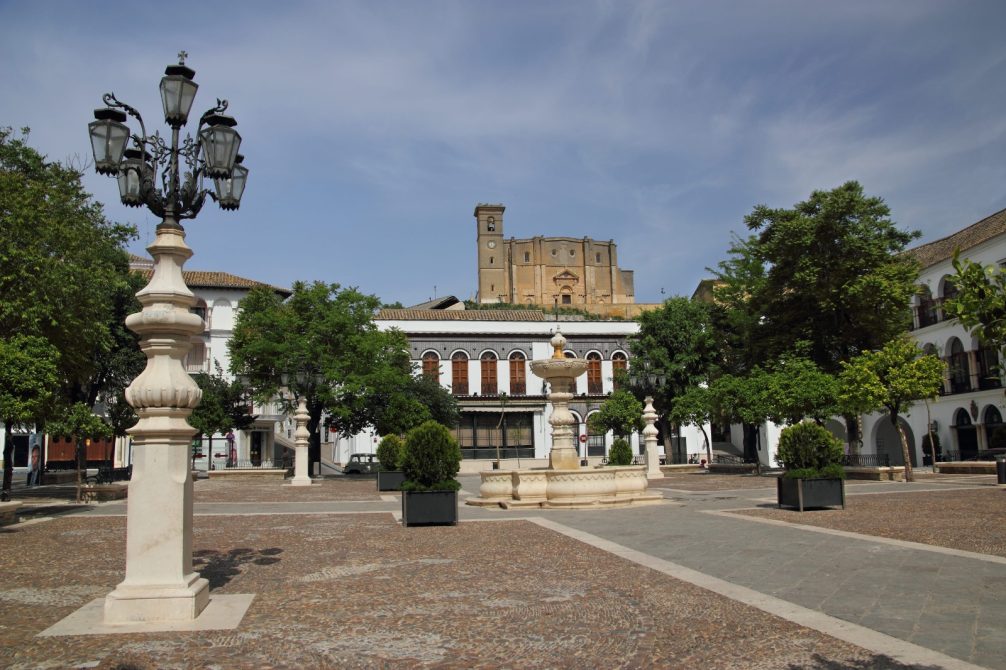
The Plaza Mayor of Osuna is one of the most emblematic urban spaces in this town. Located in the historic and monumental center of the ducal town, at the foot of the hill where the Collegiate Church of Santa María stands, it is the meeting point of some of the town's most central and important streets, such as Sevilla, Tía Mariquita, Asistente Arjona, San Antón, Luis de Molina, and Carrera. Rectangular, almost square, it is organized like a hall around a central fountain with a low basin and a polylobed base that forms the focal point of the space. From this fountain, the paving creates a cross shape on the ground, dividing the central pedestrian area into four symmetrical sections, each marked by striking ornamental lampposts with multiple arms that rise from tall, carved stone bases resembling columns. Popularly known as the Alameda, it was officially named Plaza Mayor by the first democratically elected town council. Today, it is considered the city's quintessential civic center. Several unique and noteworthy buildings stand along its facades, including the Municipal Market, the church of the Convent of the Conception, the Osuna Casino, and the city hall itself.
Read more

Active tourism, ecotourism, and leisure company. They specialize in adventure activities (kayaking, climbing, via ferrata, hiking, snowshoeing, paramotoring, diving, etc.), leisure activities, entertainment, organization of sporting events, corporate activities, school groups, summer camps, and summer play centers.
Read more
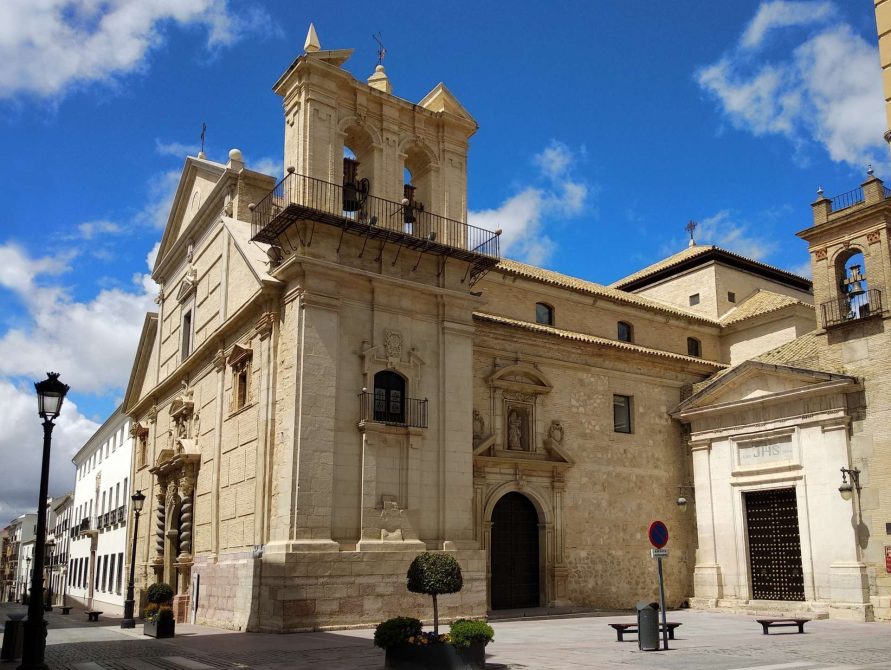
The Church of St. Peter Martyr in Verona was part of a former Dominican convent founded in 1575. Only the exterior walls, the bell gable, and two portals—the Portal of St. Peter and the Portal of Our Lady of the Rosary—remained of the church. Both are Mannerist in style and date from around 1630, although the former features Baroque elements added in 1721 under the direction of Leonardo Antonio de Castro. The recently restored building has a Latin cross floor plan, with notable features such as the central nave, with its wooden vaults, and the transept. The restoration also included the restoration of the main façade, the refurbishment of the blind triforiums above the side aisles, and the columbarium area, presided over by a sculpture of John Paul II by the local artist Francisco Javier López del Espino. The Chapel of Our Father Jesus of Nazareth is part of the adjacent Church of St. Peter Martyr. The main and oldest space serves as the dressing room for the titular image. It was built by Vicente del Castillo and the stonemason Andrés Cordón in 1758, forming a circular space in the Neoclassical style. Inside, it contains a baldachin that shelters the image of Our Father Jesus of Nazareth. The second space was built around 1838, coinciding with the closure of the Church of San Pedro Mártir, and has a similar architectural layout to the dressing room, except for the dome, which is lowered with very flat radial bands. The most notable sculptural features are the image of Our Father Jesus of Nazareth, created in the 16th century with Gothic characteristics, and the Holy Burial urn made by Pedro de Mena y Gutiérrez in 1769, which contains a recumbent Christ, a work by Miguel de Verdiguier from 1774.
Read more
Company of cultural guided tours in Écija.
Read more

Company dedicated to the manufacture and sale of olive oil.
Read more
Artisan workshop of Iberian lard and selection of gourmet products in Écija.
Read more

Traditional bakery and pastry shop specializing in products from the Subbética region of Córdoba.
Read more

A company specializing in developing and designing innovative and sustainable projects in the fields of Environment, GIS, Tourism, Education, Community Development, and Publishing. We also offer guided cultural and nature tours.
Read more
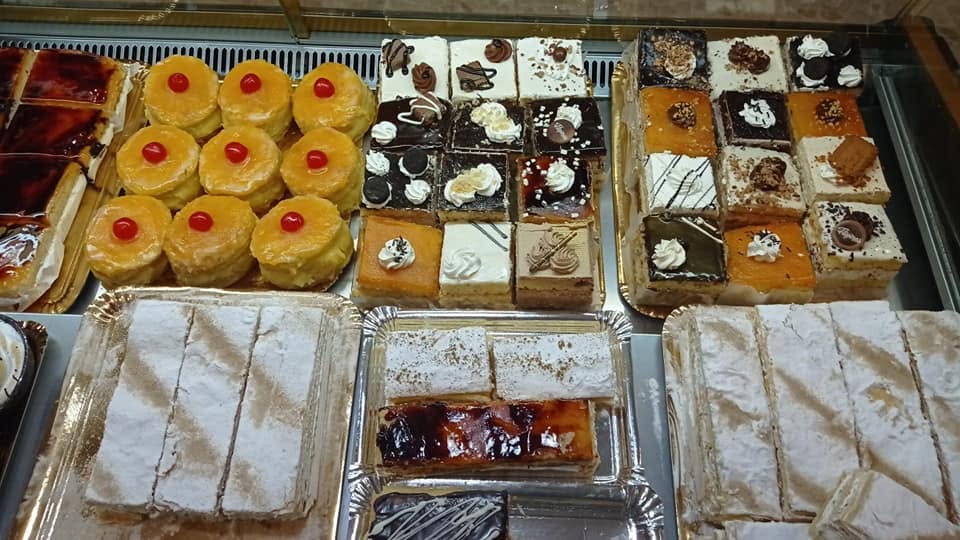
Traditional bakery with products made in a wood-fired oven, specializing in typical pastries from Cabra.
Read more
