Children's Holy Week in Caminos de Pasión

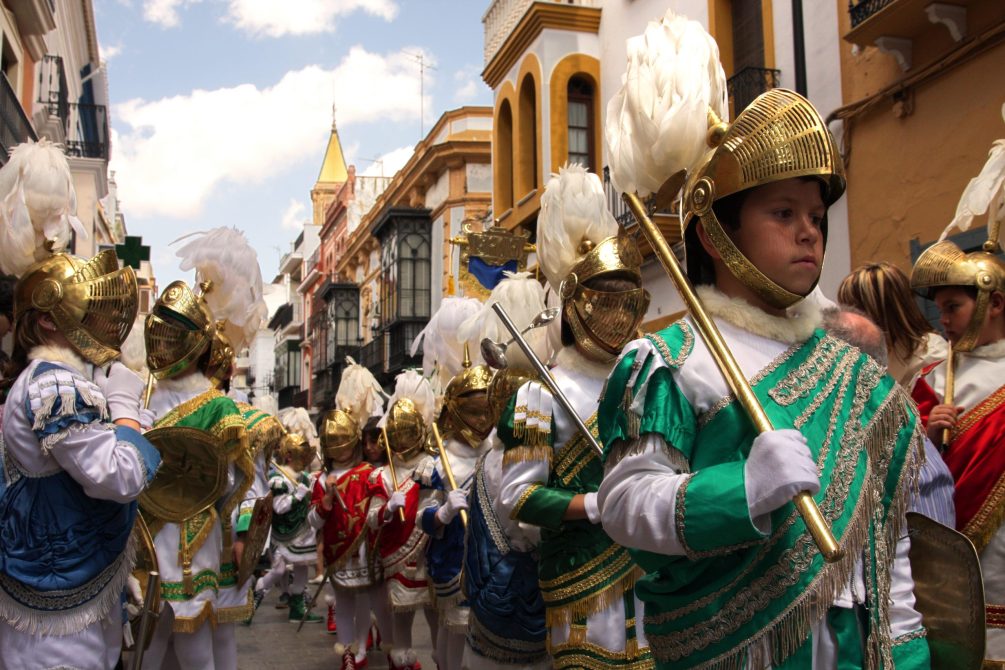
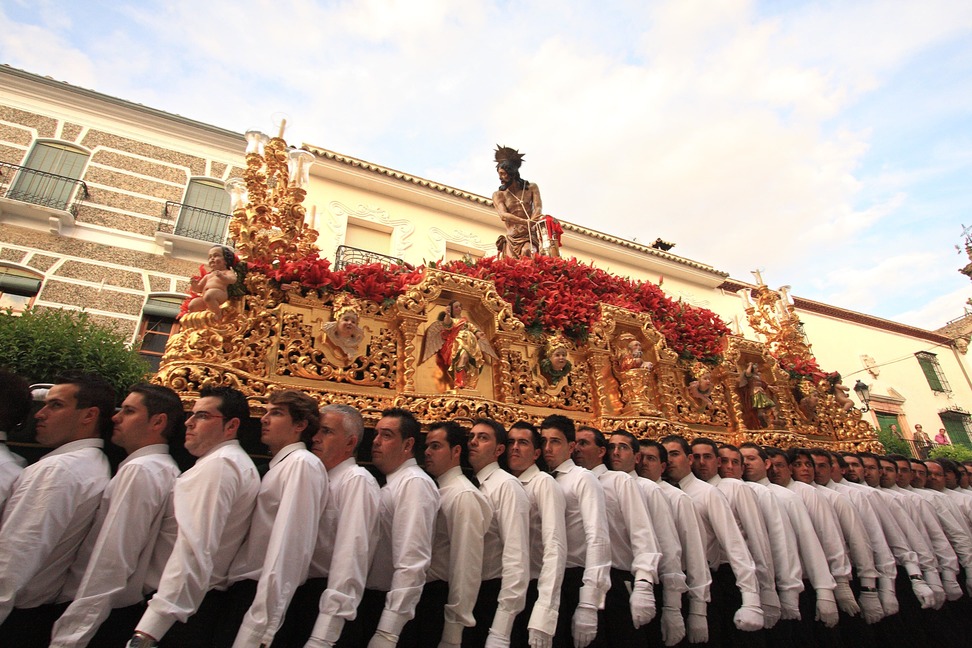
During the months of April and May, many of the municipalities along the Caminos de Pasión route prepare for the celebration of children's processions. This event is nothing more than the recreation of Holy Week by the youngest members of the community, who experience it in a special and unique way, thus continuing the traditions of their municipalities. Examples of this are Las Mayas, in Carmona, the Little Holy Week of Puente Genil or the children's Holy Week of Cabra, Écija, Lucena, Osuna, Priego or Utrera. Many of these celebrations recreate, as if it were Holy Week, the different events that take place during it, such as the celebration of prior proclamations. The processions, which recreate the steps taken during penitential processions in different towns, are usually accompanied by marching bands and in many cases travel the same streets as the brotherhoods they represent. Not only are the miniature processions of the different Brotherhoods and Fraternities staged, but also other elements that make the Holy Week celebrations in the different municipalities of Caminos de Pasión unique and outstanding at a national level. In Carmona, for example, the youngest children are the protagonists thanks to Las Mayas. The children bring out into the street small chairs adorned with flowers, like wild thrones. Of rural and pagan origin, the primitive Maya was a girl or teenager crowned with flowers and enthroned who for a whole day ruled as queen of spring over a small court of children and young people, who demanded, from anyone they found, a tribute for their queen; a custom that is still maintained under the ritual formula “a little goat (ochavito) for my Maya!”. Over time, in a process of Christianization, the girl was replaced by a simple image of the Virgin placed on the chair adorned with flowers. In Puente Genil, for example, this representation reaches its peak on May 3rd with the celebration of the Day of the Cross, which could be compared to Good Friday in Puente Genil. Numerous miniature floats or thrones are staged and paraded in procession, carried and accompanied by boys or girls alike, creating a colorful atmosphere typical of Andalusian spring. The biblical figures of the town are also represented, something very characteristic. Another of the outstanding children's celebrations is the one held in Lucena.  The children of the town perform their steps which are carried by children and which reproduce the forms of the "santería" of Lucena, a peculiar way of carrying the thrones on the shoulder, giving a special movement to each step, accompanied by the rhythm of the drum. Its origin dates back to 1855 when "preventive measures" were taken due to the cholera epidemic and, since 1973, the Association of Brotherhoods of Lucena has resumed this tradition in the form of a competition. Years later, in 1985, the children's processions began to pass in front of the chapel of Jesus Nazareno, the central image of Holy Week in Lucena, and in 1988 the group handed over the organization to the Peña El Santero. Regarding the other towns, in Écija and Utrera, for example, they coincide in the name of May Crosses and are organized by brotherhoods of these towns and, as a fact to highlight, in Utrera they have 38 editions of celebration of the contest. In Cabra, this Children's Holy Week includes a pre-proclamation on Friday, and then on Saturday, the processional parade of the different floats made by the young people takes place. Some are held coinciding with the Day of the Cross, but others, such as the Children's Procession Competition in Osuna, take place on the Saturday following Easter, and in Priego, it is traditional to hold them on the first weekend of June, coinciding with the festivities of the Brotherhood of the Pollinica. These celebrations are undoubtedly special and different, allowing you to explore the municipalities along the Caminos de Pasión route and discover their customs and traditions, which, during the spring, are also closely linked to popular religiosity.

Read more
Araceli Festivals

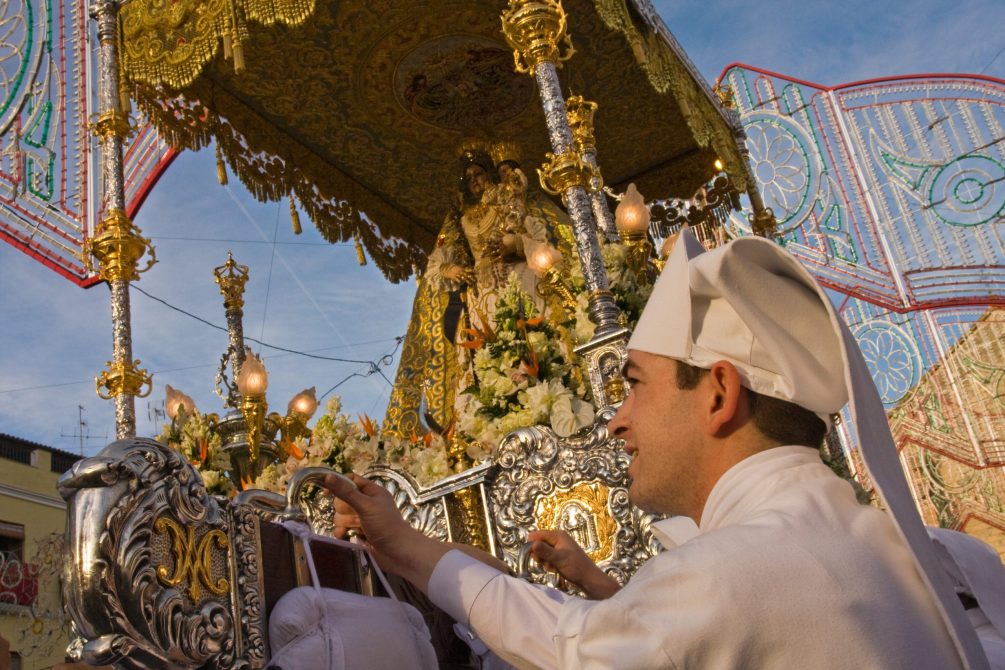
The Patron Saint Festivities of the Virgin of Araceli in Lucena have many unique characteristics and, for this reason, they have been declared as Festivities of National Tourist Interest. They take place on the first Sunday of May and, with them, the residents of the town experience days of joy that are mixed with the traditions and faith of the people of Lucena. They say that the cradle of the Araceli devotion was born in Rome, where the beautiful basilica of St. is located on one of its seven famous hills. Mary «in Aracoeli». The Araceli Festivals begin on the last weekend of April, with the Pilgrimage down from the Royal Sanctuary of the Virgin of Araceli, in the Sierra de Aras. On the way down from the sanctuary, we will find the First Cross where, according to tradition, the cavalry ran wild in the middle of the storm, but in reality the cross marks the beginning of a way of the cross that culminates at the summit of the mountain. Near the summit are the Three Crosses, which according to tradition is where the first Hermitage was located, until the current temple was built in 1600. Once she arrives in Lucena, the Virgin of Araceli will be in the Parish of San Mateo until June. During this time, locals and visitors can see the Virgin in this central church of the town. The main festival takes place on the first weekend of May; the activities begin with the opening speech followed by a large flower offering in which the women participate, adorned with white mantillas. Characteristic is the procession of the patron saint under a blanket of fireworks, and countless recreational and religious acts bring together the fervor of a festival in which Lucena receives hundreds of visitors. Thirty-six are the saint bearers who have the privilege of carrying the patron saint along the route she takes through the streets of the town, as she advances among countless petals. Upon arriving back at the Church of San Mateo, one of the most special moments occurs: the hundreds of rockets and fireworks that fill the town's sky with noise and color in honor of its patron saint. Finally, the pilgrimage up takes place on the first Sunday of June and involves the return of the Virgin of Araceli to her Sanctuary as well as its reopening. Throughout the year you can visit the Virgin in her temple, which is one of the most interesting baroque works in the town. Likewise, its location is well worth a visit, as from there you can see five Andalusian provinces and it was the filming location for Pedro Almodóvar's film 'All About My Mother'.  Furthermore, the fervor and deep-rooted devotion to Araceli among the people of Lucena is evident in the House Museum of the Virgin of Araceli, located in the historic center of Lucena, where an important brotherhood heritage is treasured around the Patron Saint of Lucena and the Andalusian Countryside and can be visited throughout the year. A festival that we definitely recommend you experience with the locals of Lucena, or a great excuse to visit the town throughout the year. In 2020, they will be experienced in a different way, from home. You can find more information at the following link

Read more

Feast of the Cross

The Feast of the Cross is a popular celebration of Christian origin that commemorates the discovery, by Saint Helena, of the cross where Jesus Christ was crucified. Thus, this festival has taken on a prominent role in many municipalities of Andalusia and in several that are part of the Caminos de Pasión route. Taking May 3rd as the reference day for the celebration of most of them, it is throughout the entire month when the celebration of this event takes place. Some, as detailed below, have very specific characteristics in their celebrations: either because of the space in which they are held, the customs and traditions that are linked to them, or because of the acceptance and unity of the neighbors around them. A festival where flowers take center stage and where other elements characteristic of each town and municipality and linked to our roots, such as flamenco or local cuisine, are mixed with the unique features of each celebration. In Alcalá la Real, for example, the festival takes place in one of the oldest neighborhoods in the town, called 'Juego de Pelota'. There, next to the Ecce-Homo Hermitage, stands a cross that becomes the center of the festival. In the municipality, the month of May is known as the "month of the Virgin and the flowers" and the different crosses located in the town are adorned with Manila shawls, flowers, candles and other popular decorative elements. In the municipality of Baena, the celebration of the Day of the Cross extends over several weeks, during which the competition of Crosses, Grilles, Windows, Patios and Balconies has been organized for 16 years. An initiative in which the residents participate, as well as associations or Brotherhoods and Fraternities of the town in a tradition that is very well recognized in the province of Cordoba, which is the decoration of these spaces with flowers as protagonists. Most of these crosses are located within the Almedina neighborhood, the soul of the old city. In Cabra, the celebration of the Day of the Cross is experienced in a very special way. From its beginnings, this festival has been celebrated in the popular Cerro neighborhood, to which it is closely linked, and it originated from the celebrations of the Holy Cross Festival organized and celebrated by the Brotherhood of the True Cross, around May 3rd. Perhaps the most characteristic and unique element is the tradition of the "Santacruces" that the youngest children take out, arranged on a wooden platform usually carried by four or six boys and girls, on which a cross is erected, adorned with flowers and some images of Cabra. The "Santacruces" come out into the streets a few days before May 3rd and the children ask for "a little alms for the Holy Cross", singing a popular little song that says: "Oh Mary, my Mother, oh heavenly comfort. Protect us and guide us to the heavenly homeland.” The most unruly ones, if the guardian accompanying the cross allows it, kick the petals to the ground and create great sorrow in the group with the cry "the stick broke it." On the 3rd, a gathering takes place in the Plaza Vieja, ending next to the Church of the Hill, where, after distributing cakes and chocolate, the prizes of the competition are awarded. In recent years, small floats have been incorporated into the parade, in the form of a "little Holy Week", in which children are introduced to the brotherhood traditions, so deeply rooted in the city. The Feast of the Cross in Priego de Córdoba coincides with the first weekend of the Sundays in May, a very particular local tradition, and that weekend it shares the spotlight with the events of the Brotherhood of Charity. Thus, the Villa neighborhood of the town becomes an ideal place to experience this festival where flowers in the streets take center stage. The municipality of Puente Genil began celebrating this festival in 1988, always coinciding with the third weekend of May, and the residents embraced the initiative as another local tradition.  The festival itself begins on Friday and continues throughout the weekend until Sunday. Thus, the Crosses themselves consist of crosses, usually made of wood, decorated with flowers or with typical motifs of the area, such as bread, quinces, olives, etc… Around it, traditional elements are usually adorned: railings, chairs and tables characteristic of this area of ​​Andalusia. There are numerous "crosses" participating in the competition. At each May Cross celebration, a small fair is usually set up, normally organized by the members of the Association, Brotherhood or Corporation that sets up the Cross, and it is around it that the neighbors gather during these days of tradition. Thus, a festival of popular origin that combines the religious with the pagan and that defines many characteristic aspects of Andalusian culture can also be seen as the celebration with which the people welcome spring, filling their streets with flowers and making them the true protagonists.

Read more

Sundays in May in Priego de Córdoba

The Sundays in May are one of the most deeply rooted festivals in the town of Priego de Córdoba, as well as one of the most genuine. Its permanence over time, the cause that provoked its origin and its own external form, are sufficient aspects to give it its own particular configuration. Deeply rooted in the people, throughout its more than three hundred and fifty years of celebration, it has been maintained and has reached us with a strong vigor and splendor. More than enough reasons to learn about the origin of this traditional festival in one of our municipalities and find out what this celebration consists of. There were several theories about the origin of these celebrations. One of them was, precisely, the people's prayer to be freed from the plague, but after consulting the different historical documents that the brotherhoods and confraternities have, the dates do not coincide and everything points to its origin being related to the request for rain, necessary to obtain good harvests. Thus, there are records within the participating brotherhoods that make direct references to rain as an objective to be achieved with these celebrations. As a result of these celebrations, another activity emerged within the brotherhoods, namely raffles, whose sole purpose is to obtain funding through the contribution of the faithful and neighbors. Each weekend in May corresponds to a different brotherhood or confraternity that organizes, around these days, different activities such as religious services, masses and which culminates on Sunday with the processional outing of the patron saints through the streets of the town of Priego. The aesthetics of these processional parades are also very different from those shown during Holy Week since, although the procession is similar, no penitential station is performed. On this occasion, the festivities could be considered glorious, and for this reason, the floral decorations are more showy and colorful, different clothing is used for the bearers, and the women usually accompany the floats and thrones with the traditional Spanish mantilla. Rockets and fireworks are also part of the celebration, and the processions are accompanied by civilian or military bands that provide the musical accompaniment to the celebration. In religious services, the musical accompaniment of choirs and orchestras stands out, as well as the performances of 'Arias' and 'Prayers' by prominent tenors and baritones, expressly hired for this purpose. Thus, there are five Brotherhoods and Fraternities that are part of this unique tradition of the Sundays in May in the town. The first weekend, the Brotherhood of the Virgin of Charity takes center stage and makes its journey through the historic Barrio de la Villa; during the second weekend, Our Lady of Good Fortune takes center stage. The third weekend of May is reserved for the religious services and procession of the Virgin of Solitude and the fourth, for the Brotherhood of Jesus at the Column. Thus, the fifth and last one, as it could not be otherwise, is for the Brotherhood of Jesus of Nazareth, popularly known as the 'King of Priego'. Any time of year is a good time to visit Priego de Córdoba, but it is on these Sundays in May where, in addition to discovering the rich architectural and monumental heritage linked mainly to the Baroque period, you can experience one of the town's most deeply rooted and fervent festivals and see the municipality adorned with flowers, along with other important celebrations such as the Day of the Cross or the competitions for balconies, railings and patios held in the province of Córdoba.

Read more

Summer Nights at Caminos de Pasión, July

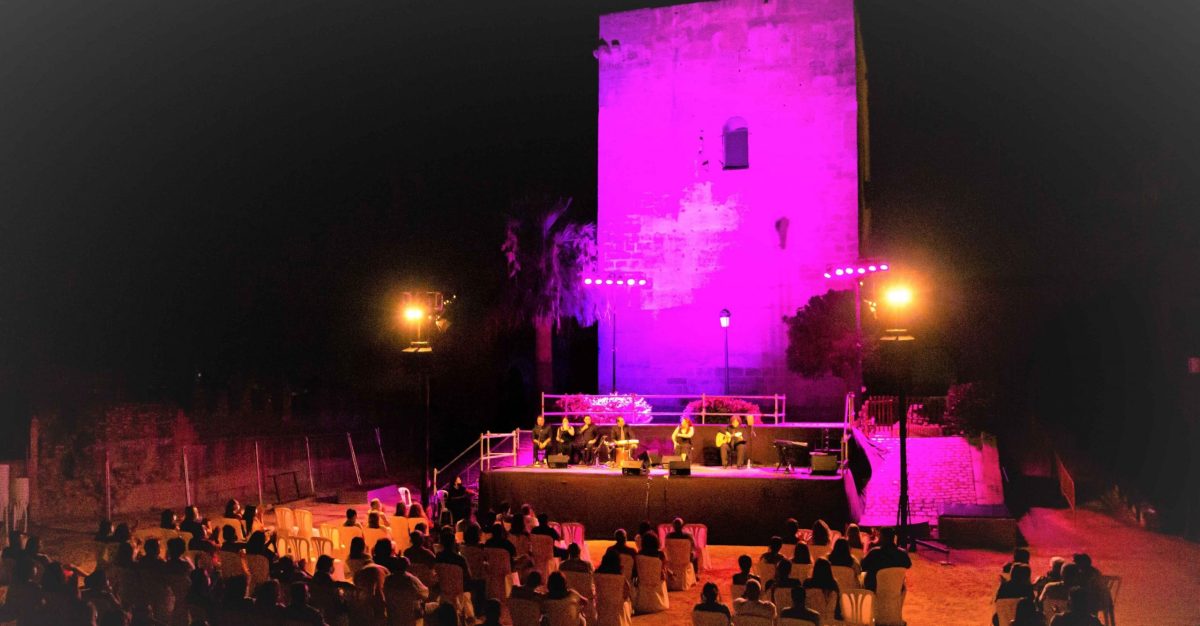
Every summer, the nights in the municipalities that make up Caminos de Pasión are filled with cultural activities that allow visitors to enjoy the great artistic and heritage sites that surround them. During this month of July, several events are taking place along our Route. Alcalá la Real (Jaén) proposes, until July 30, 'Sunsets on the border', an activity where you can enjoy concerts by artists such as David Otero, Georgina, Comandante Twin and Antonio Arco in a unique setting, the Fortaleza de la Mota in Alcalá la Real. Another of the summer events in this municipality of Jaén is the Etnosur Ethnic Music Festival, which will take place between July 15 and 17. La Mari de Chambao, Derby Motoreta's Burrito Kachimba, Califato 3/4 and a wide range of circus activities, workshops, forum, cinema and storytelling, are part of this year's program. In Baena we can enjoy the Early Music Festival, the 'Heart of the Songbook' cultural cycle which will take place between July 15 and 18. The program includes “Couperín the Great”, by Les Folies Consort; “José Marín, if not for love”, by the Marizápalos group; or courses in viola da gamba, plucked string instruments and singing. During July and August, Cabra carries out the cultural campaign "A pie de barrio" (At the foot of the neighborhood), consisting of a series of activities - cinema, zarzuela, theater, music, exhibitions - designed to explore all corners of the city in the cool of the night in the Sierra Subbética region of Córdoba. The 'Music and Heritage' Cycle aims to link the enjoyment of the extensive and rich heritage of the city of Carmona, with the listening of music concerts, in open spaces, by artists such as Maria Terremoto, Abel Romano, opera, zarzuela or jazz. This series will allow you to enjoy a wide variety of concerts taking place during the months of July and August. Écija has a varied program of activities for this summer to discover Écija, routes, workshops and experiences in the main heritage sites of the municipality. In addition, during the month of July, the nights of Écija are celebrated in unique places with the Music Cycle in the Palaces which includes concerts of film soundtracks, blues, zarzuela, celtic music and classical music, together with the Écija puppet festival 'Titirimartes', which will take place during the months of July and August. In Lucena, the Summer Fan program aims to cool down and make summer nights more bearable, in complete safety. With more than twenty varied proposals, such as live concerts, summer cinema, flamenco, carnival, exhibitions, conferences, magic and literature, they will refresh the summer with a final flourish that will be unforgettable: the XII National Fandango Competition of Lucena. In addition, on July 24, Lucena hosts the most important carnival festival in the province of Córdoba, Carnavaluc, with the participation of “La Eterna banda del Capitán Veneno” who will bring an anthology of Juan Carlos Aragón, “Los Aislados” Comparsa del Jona and “Antología del Canijo”. For its part, the Tourism Department is also proposing various cultural activities such as escape rooms at the Castillo del Moral, and a DO wine tasting. Montilla-Moriles, Sunset Visits or Sit in the Cool Air, a route through several emblematic courtyards of Lucena. Also during the summer months, the Noches en Vela (Nights on the Candle) are held at the Coto las Canteras de Osuna with top-level performances in an incomparable setting, as well as the Cultura al Fresco (Culture in the Open Air) program with activities to enjoy on summer nights of theater, music or dance. Priego de Córdoba hosts a wide program of festivals and concerts during the summer season: Mascarón 2021. This cycle includes the second edition of Summer in Different, with performances by SFDK, Antonio Orozco and Martita de Graná; the 73rd edition of the Music, Theatre and Dance Festival, with various performances including Chico Pérez, Víctor Bravo, Pilar Astola or Pastora Soler; the fifth JazzAndaluz Festival, with performances by Pepa Nibla or Dorantes Trio; and the second Priego Tourism Festival, with a concert by Taburete. The Mascarón program will end in October with the celebration of the Autumn Sessions. In Puente Genil, a new edition of Nights at the Roman Villa of Fuente Álamo is being held this summer, encompassing a total of 39 diverse activities in music, gastronomy, theater and leisure aimed at different profiles and segments of the population. And in Utrera, the Nights at the Castle series is being held these months, with performances by Rafael de Utrera, Dorantes, Enrique Montoya, Toni Zenet, Arcángel or María José Llergo, and the cultural agenda that includes activities such as 'Music on the Rooftop', 'Sunsets', 'Myths and Legends' and others related to gastronomy.   Finally, it is worth highlighting the cultural agenda dedicated to flamenco, which is, par excellence, the highest expression of folklore in the municipalities of Caminos de Pasión. Throughout the year, but especially during the summer, various nationally renowned festivals take place, including the Fosforito Flamenco Singing Festival in Puente Genil, which has a long history and has featured the main figures of flamenco. However, in all the towns, activities and festivals related to this discipline are held. The full program can be found on the Caminos de Pasión website: https://www.caminosdepasion.com/eventos/

Read more

Flamenco in Paths of Passion

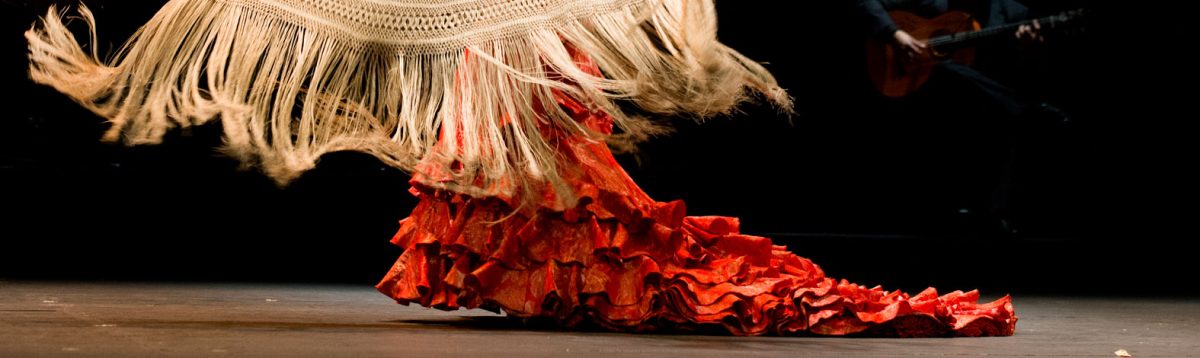
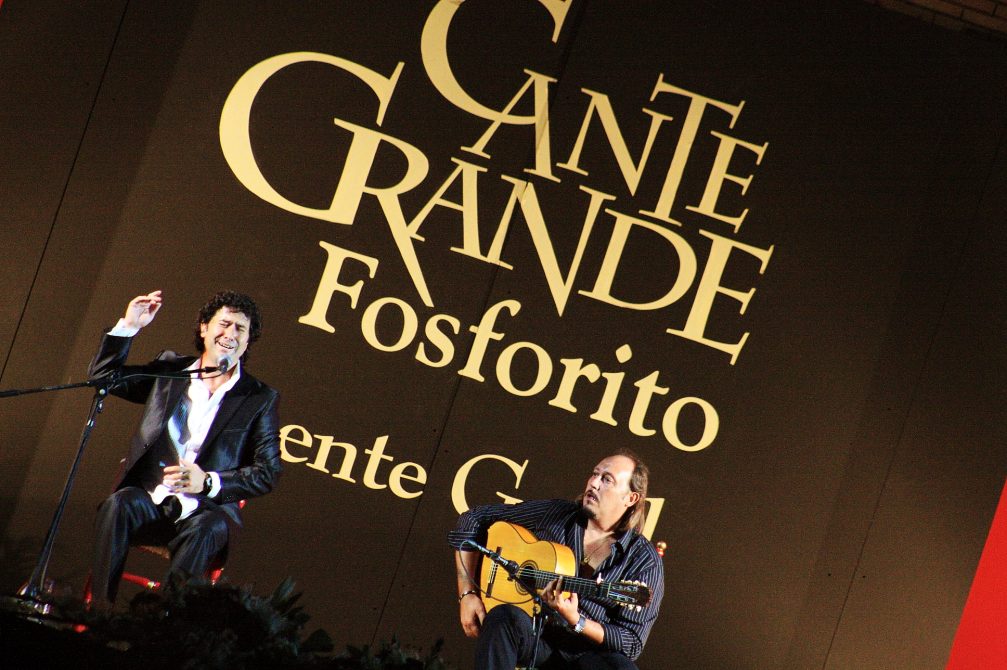
Flamenco is, par excellence, the highest expression of folklore in the municipalities of Caminos de Pasión. Throughout the year, but especially during the summer, several nationally renowned festivals take place, including the Potaje Gitano de Utrera, the oldest flamenco festival in Spain; the Fosforito Flamenco Singing Festival in Puente Genil, which boasts a long history and has featured leading flamenco artists; the Osuna Flamenco Festival; the Ecijana Flamenco Night; the Priego de Córdoba Flamenco Festival; and the Lucena National Fandango Competition. The Potaje Gitano de Utrera, which takes place at the end of June, is the oldest flamenco festival in the world. He was born in May of 1957, during a meal of the Brotherhood of the Gypsies of Utrera in celebration after the first processional outing in the early hours of Good Friday. Among those present were Fernanda and Bernarda de Utrera, Pepa, Perrate, Manuel, Gaspar, and Diego del Gastor. This Festival is usually attended annually by the leading figures of the moment, as well as flamenco fans, tourists and culture lovers. For its part, the "Fosforito" Festival of Cante Grande in Puente Genil, which is celebrated in mid-August, is one of the most significant realities in the traditional and popular culture of the town. With a history built on the artistic participation of the most relevant figures in the history of this cultural expression, it has been, year after year, since its first edition in 1966, a leading reference for the three aspects of this Andalusian art and feeling: Song, Guitar and Dance. Throughout these years, every major figure in flamenco has graced the stage of this Festival. They have all contributed their bit to the construction of a Festival that is a benchmark in Spain. We also find the Osuna Flamenco Festival, the birthplace of artists such as Chato de Osuna, Pepe Romero, Lele de Osuna or the singers of the Cuevas and Torres families. Although the festival emerged in 2005, it already has a strong commitment to young flamenco, thus giving an opportunity to those emerging artists who are projected as future figures of flamenco. It is organized by the Osuna City Council and has the collaboration of the Peña Flamenca La Siguiriya. Its celebration takes place every year at the end of August. The Ecijana Flamenco Night is one of the most established flamenco festivals in the province. It is celebrated with the aim of promoting flamenco culture as a hallmark of identity, prioritizing the quality over the quantity of performances. In the flamenco night in Écija, all the flamenco clubs of the municipality collaborate selflessly. Priego de Córdoba also celebrates its Flamenco Festival at the end of August in the Fairgrounds. This festival is characterized by the singers who have participated in it, such as Chiquetete, or the guitarist Paco Cepero. It is one of the most established flamenco festivals in the province, which has hosted the greatest representatives in the history of flamenco and which year after year adorns one of our greatest traditions. Finally, Lucena has a great flamenco tradition, boasting the third oldest Flamenco Club in the world, which bears the name of the municipality. Held every two years, the Lucena National Fandango Competition, which began in 1998, is organized by the City Council, in collaboration with the Lucena Flamenco Club and the La Barrera Flamenco Club. Lucena always aims to highlight the importance of this variant of cante jondo, just as they pay attention to other types of singing in their area of ​​influence, such as the songs of Malaga, Granada and Levante. The selection phases take place in May and June, and the final is usually delayed until the end of summer, at the beginning of September. Likewise, there is a parallel competition on Fandango Lyrics from Lucena, the Antonio Rivas Prize. Apart from these major flamenco events that take place annually in the municipalities of Caminos de Pasión, we must not forget that all the towns celebrate activities and shows related to flamenco. The different neighborhoods of the municipalities host, especially during the summer period, festivals and activities in which flamenco takes center stage. We invite you to discover flamenco through Caminos de Pasión.

Read more

Caminos de Pasión presents a wide cultural offering for the summer nights of August

Summer nights in the municipalities that make up Caminos de Pasión offer a wide variety of cultural activities that take place in the different artistic and cultural enclaves that each municipality houses. Just like last July, August is packed with events to enjoy culture at Caminos de Pasión. The 68th edition of the Alcalá la Real August Festivals will be held until August 13th. Viva Suecia, a leading national and international group in the rock and indie scene, will perform on August 7th. The star of La Noche Flamenca, scheduled for August 13, will be José Mercé, a show that will also feature the Carrasco family, with Reyes Carrasco at the helm and Pedro "El Granaíno", among other artists. Sergio Albacete will perform with a quartet in La Mota on August 1st. On August 2nd, the Molina Brothers Company will do the same in Mures Park with CircoMania. Rolabola will arrive on August 4th and on August 5th it will be the turn of the dance show Swan Lake. La Borriquilla will host the Nights of Humor on August 6th. The Alfonso XI Choir will give its traditional festival concert on August 8; Cerologica will perform on August 9; the Carman circus show will arrive on August 11; and Chema del Barco from Villacarrillo will arrive on August 12 with the Lo Claro company and the work Ushuaia. During the month of August in Baena, electronic music sessions will be launched in the historic center, where the locals of PARTY GOO will participate, in addition to the Week of Plastic Arts with exhibitions, life drawing, graffiti workshop and contests. In Cabra, the 'Culture at the neighborhood level' program presents several concerts: the indie/pop group 'El Viento' will perform on the night of August 5; on August 7 there will be a flamenco night; on August 19 a concert by the Cabra Music Band; and on August 26 the performance of the play 'Traditional Tales of the World'. For its part, the program 'Where the stars shine' will bring to the Cabra Auditorium the Gym Fusion Gala, Magic Laughter Therapy and the performances of Loquillo, on August 28, and the violinist Ara Malikian, on August 29.   In Carmona, the 'Music and Heritage' Cycle presents the following performances: on August 4th, Meejazz; on August 11th, Rosario Cohete; on August 18th, Maui 'By Magic'; and on August 25th, the 'Our Zarzuela' gala.  Écija offers two proposals, the Puppet Festival during the days of August 3, 10 and 17 and, under the program 'Nights to discover Écija', the activities 'Night in the Museum' for the 4th, 'Écija Gremial. 'Silk, plaster and clay' on the 11th, 'The Walls of Écija' on the 18th, 'Painting History' on the 24th and 'Enigmatic Écija' on the 25th. The night of August 28th is also the Ecijana Flamenco Night.  Lucena's cultural agenda offers several activities: 'Siéntate al Fresco' (Sit in the Fresh Air), a route through the patios, on August 6 and 7; a flamenco show by Araceli Hidalgo in Plaza Prudencio Uzar on August 6; the 'Battle of Lucena on a Chessboard' on August 13; the concert by Pepe Huertas and Crash4jazz in Plaza Pemán Aramburu, also on August 13; a night tour of Jauja on August 14; and 'Lucena Trails by Moonlight' on August 20.  In Osuna, the 'Cultura al Fresco' program presents the concerts of Rubén Levaniegos Trio on August 24 and 'Paso Estrecho. Boleros' on August 31st. The Flamenco Night of Osuna will take place on the night of August 28th.  Priego de Córdoba celebrates the Music, Theatre and Dance Festival during the month of August, with the performance on August 1st by Juan Santamaría and the Symphonic Band of the EMMD of Priego 'Homage to Carlos Cano 75th Anniversary'; the Jazzandaluz Festival with the performances of Razz Miscelánea on August 13th, Pepa Niebla on August 14th and Dorantes Trio on August 15th; and the Song Festival with the Final Gala and the concert of Taburete on August 27th.  For its part, Puente Genil proposes the 'Nights at the Roman Villa of Fuente Álamo' which includes 'Gods and Men' on August 1, 'Divis Ceres' on August 6, 'The Divine Pleasure of Water' on August 7, 'The Nighttime Sound of History' on August 8, 'A Journey to the Origin 'Generating Emotions' on August 13, 'The Nighttime Sound of History' on August 14, 22 and 28, 'The Footprint of Rome' on August 15, 'The Night of the Researchers' on August 20, 'A Tale of Dim Lights' on August 21 and 'In Vino Veritas' on August 27. Puente Genil also celebrates the 'Fosforito' Festival of Flamenco Singing on the night of August 14th.  The cultural program for August in Utrera includes 'Sunsets from the Keep-Castle' on August 3, 7 and 13; 'Myths and Legends of Utrera' on August 6 and 25; 'A Taste of Utrera' on August 4, 14 and 18; 'Santiago Nocturno' on August 11 and 20; 'Music on the Rooftop' on August 27; the performance of the Chirigota 'Vamos de impacientes' on August 5; and the show of the comparsa 'La Chusma selecta' on August 12. In addition, as part of 'Nights at the Castle', there will be performances by Chirigota de Fermín y Antoñito on the 5th, Las Niñas de Cádiz on the 7th, Comparsa de Martínez Ares on the 12th, Arcángel on the 14th, Enrique el Extremeño on the 19th, and María José Llergo on August 21st.

Read more

The fair: a celebration with its own identity and history

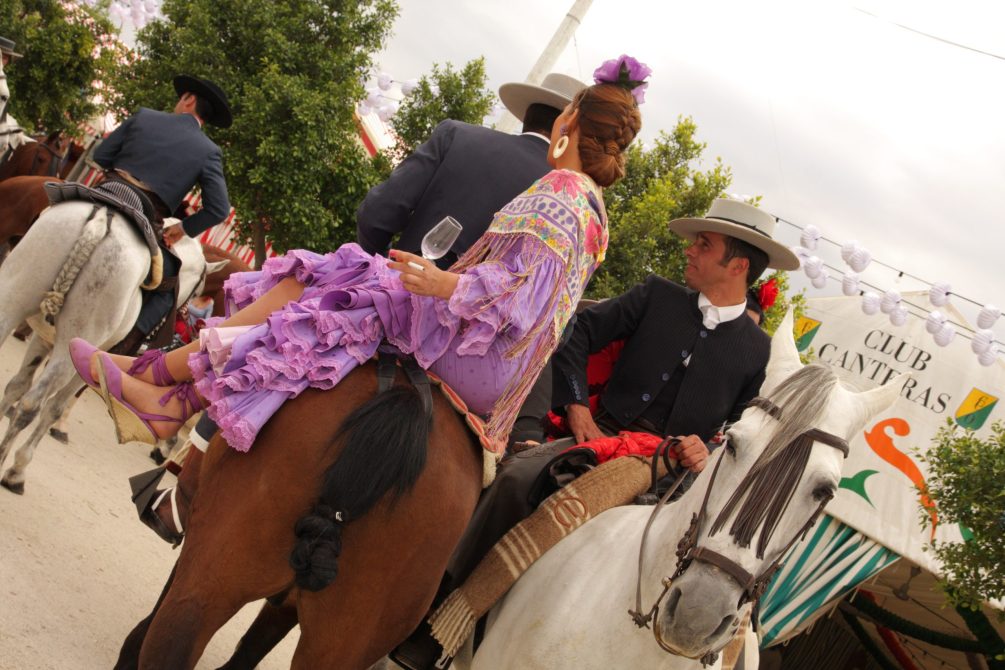
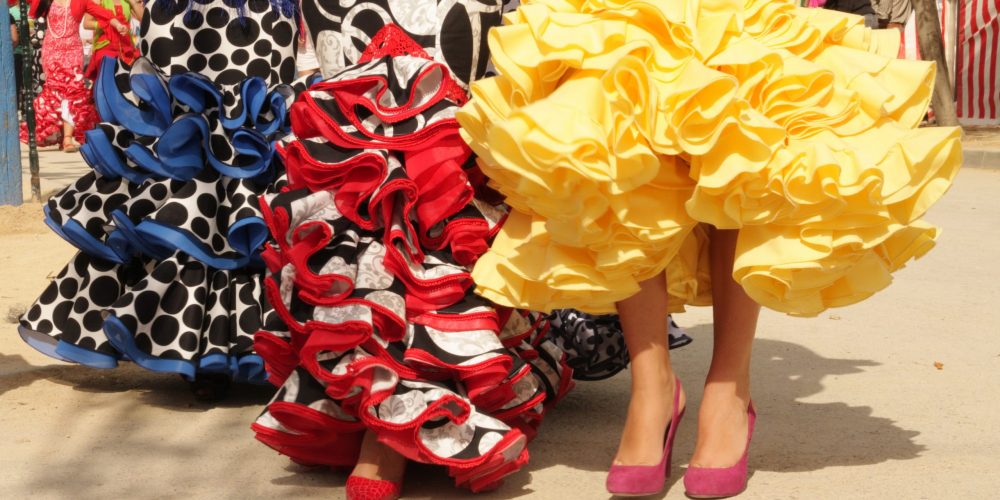
The fairs are one of the most prominent celebrations in the towns along the Caminos de Pasión (Paths of Passion) route, and these events are one of the main attractions for which the entire Andalusian community is known. These unique celebrations, which encompass fun, joy, music, crafts, and traditions, are well worth a visit. The origin of the fairs is marked by two factors: either religious, as they pay homage to the patron saint of the town or to an image of great popular devotion, or, on the other hand, they may be linked to livestock. The fairs were held around the times when the inhabitants of the towns exchanged, bought, sold, or bartered the animals they owned. Some of them, such as those in Puente Genil and Carmona, began to be organized thanks to the approval of renowned figures of the time, such as Queen Maria Cristina and Henry IV of Castile, respectively. Most of these festivals are celebrated during the spring, with May being the main month, or during September, coinciding with the beginning of autumn, a time that marked the return of agricultural work. Currently, these celebrations are a major tourist attraction, as the streets of the towns and villages come alive with activity. Color, music, and joy take center stage at the fairgrounds, and the jovial atmosphere reflects the open and warm character of the locals. The fairs are linked to countless unique features and milestones tied to the culture of each town. Flamenco fashion plays a fundamental role in these events, and behind it lies an entire industry and a deep understanding of the customs and traditions of our culture. Bullfighting events are also held in some towns during these days, and the equestrian world, whether through riders or horse-drawn carriages, also takes center stage. Gastronomy is an integral part of these festivities, providing an opportunity to savor local products with protected designation of origin, such as wine. Cured meats, cheeses, and ham are some of the most typical accompaniments to this celebration. And, speaking of essential elements, a fair wouldn't be complete without background music, and in this case, Sevillanas and flamenco are characteristic.

Read more

The royal fairs of September in Caminos de Pasión

The Royal Fair of Priego de Córdoba is held from August 29 to September 5 in its current and modern venue of the Niceto Alcalá Zamora Park, and is considered to be the great fair of southern Córdoba. Traditionally, the 3rd is the main day, with all the residents of the nearby farmhouses and villages traveling there. There are usually important bullfighting events which together with the numerous street vendors who travel to our city, the livestock fair and the modern agricultural fair make the Priego de Córdoba fair a diverse, colorful and intense fair; there is no shortage of musical shows, booths and attractions.  In 2021, the traditional booths will be transformed into terrace bars located in the Fairgrounds from September 2nd to 5th, with limited capacity, no bar service or dancing. During these days you can also enjoy a varied program of concerts and shows on the stage set up in the Fairgrounds, such as the performances of Joana Jiménez, Danza Invisible, El Bomba or Caja Manuela. In 2021, the Royal Fair of Our Lady of the Rosary ... Sra. The Consolación de Utrera festival will host, from September 1st to 12th, a varied program of activities, including concerts, flamenco performances at the Utrera Castle, bullfights, an amusement park, musicals, and more. Highlights include the Mamma Mia musical, a tribute to Fito and Fitipaldis, a Sevillanas and Bulerías dance competition, the Siempre Así concert, a bullfighting show, the 'García y García' theater show, and children's shows. The September Fair is considered in Cabra as the city's big festive time. A truly remarkable event where religiosity, local customs, traditions, art and countless other elements make it the center of attention for the entire region from September 3rd to 8th. The Fair is held in honor of Mary Most Holy of the Sierra, patron saint and perpetual mayor of the city. It has been declared a National Tourist Interest. In 2021, the traditional booths will be transformed into terrace bars located in the Fairgrounds, with limited capacity, no bar service or dancing. During these days you can also enjoy a varied agenda of activities, among which the Cayetano Muriel Flamenco Festival stands out, featuring performances by Remedios Amaya, Rancapino Hijo, Antonio Reyes, Tomatito or El Perla; performances by Juanlu Montoya, Manuel Lombo, Las Soles or the Virgen de la Sierra Pilgrim Choir; bullfighting performances in the Bullring; sports competitions, children's activities, a magic and puppet show, or cultural exhibitions; and activities centered on the Patron Saint of Cabra such as the Proclamation of the Festivity in Honor of Mary Most Holy of the Sierra, the Solemn Religious Service and the Traditional Novena. In Lucena, the Royal Valley Fair is a date eagerly awaited each year by all the residents of Lucena as a unique moment of meeting and fun in the final stretch of summer. Thousands of light bulbs and lanterns are lit every year in the first days of September to celebrate an event that takes place in the new fairgrounds. In 2021, the traditional booths will be transformed into terrace bars located in the Fairgrounds, with limited capacity, no bar service or dancing. During these days you can also enjoy a varied agenda of activities that includes the performances of Marisol Bizcocho, Paco Candela, Pasión Vega, Omar Montes or the children's show Pica Pica. For their part, Alcalá la Real, Baena and Écija will present their programs in the coming days. These royal fairs join those held in May in Carmona and Osuna, and during the month of August in Puente Genil.

Read more

February is the month of the Feast of Our Lady of Candelaria in Caminos de Pasión

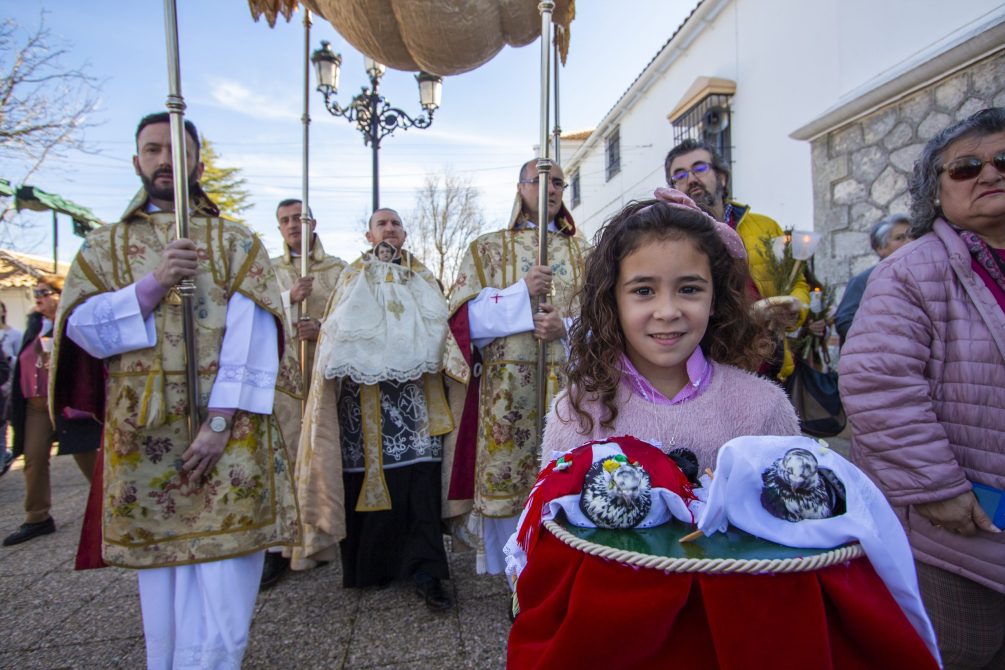
The Feast of Our Lady of Candelaria, also known as Candlemas, Candlemas, or the Feast of Light, is a popular Catholic festival in honor of Our Lady of Candelaria, a Marian devotion deeply rooted in Spain since the early 10th century. It is celebrated every February 2nd, coinciding with the Feast of the Presentation of the Lord and the ritual purification of the Virgin Mary. In Alcalá la Real, on February 2nd, the Virgin of Mercy is carried in procession, to whom offerings of pigeons dressed in various costumes and meringue cakes are shared among the attendees. Additionally, on the night of February 1st, Candlemas Eve, the Night of the Bonfires takes place in different neighborhoods of the city, where local wine and products from the traditional pig slaughter can be enjoyed. In Cabra, the Candelaria Pilgrimage is celebrated on Sunday, February 6th, at the Sanctuary of Our Lady of the Sierra, marking the first pilgrimage of the year. At noon, the blessing of the candles and rosemary takes place, followed by the procession of the Divine Child around the Sanctuary, accompanied by Holy Mass. After the Eucharist, the traditional veneration of the Child Jesus's hand occurs. Throughout the day, pigeons, cakes, bread, and ring-shaped pastries are offered, and a popular raffle is held. Meanwhile, Osuna celebrates the Feast of Candlemas with a solemn three-day novena on January 26, 27, and 28 at the Church of San Carlos, culminating on January 29 with a procession departing at 5:00 p.m. from the Church of Santa Clara. Finally, in Priego de Córdoba, around February 2, candles are lit in honor of Our Lady of Candelaria, and it becomes a gathering place for locals and visitors who bring ring-shaped breads to the churches to be blessed, or "baptized," as it is popularly known. After the blessing, the pastries are enjoyed at home or taken to the bonfire itself, where they are drizzled with oil and served with crushed olives and salt cod. Similarly, on Saturday, January 29th, the Candlemas celebration of the Brotherhood of Our Lady of Sorrows and the Holy Christ of the Good Death takes place at the Calvary Esplanade. Later, the Candlemas celebration of the Brotherhood of Charity is held on February 1st in San Juan de Ávila Square.

Read more