Church of Saint Peter Martyr and Chapel of Our Father Jesus of Nazareth
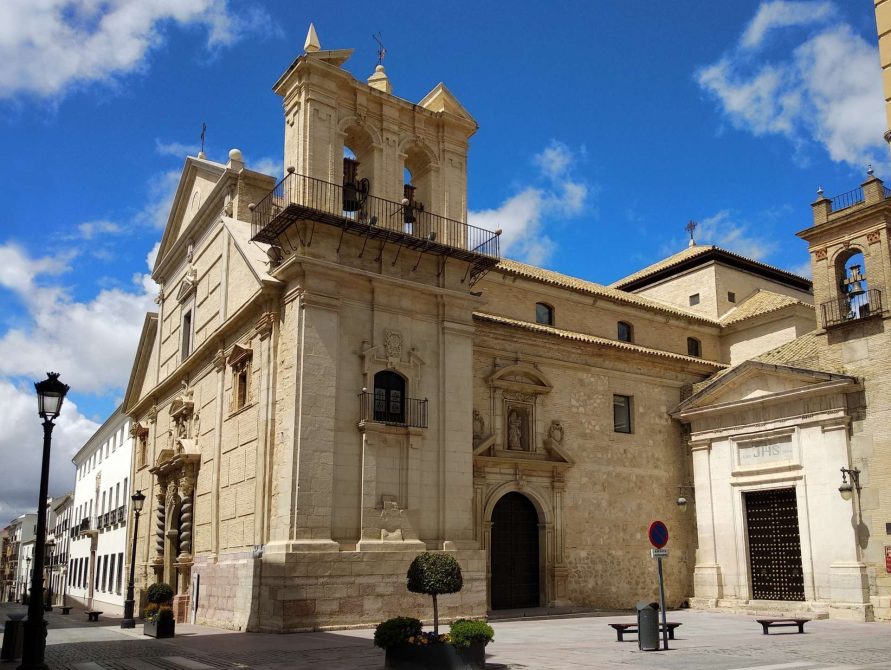
The Church of St. Peter Martyr in Verona was part of a former Dominican convent founded in 1575. Only the exterior walls, the bell gable, and two portals—the Portal of St. Peter and the Portal of Our Lady of the Rosary—remained of the church. Both are Mannerist in style and date from around 1630, although the former features Baroque elements added in 1721 under the direction of Leonardo Antonio de Castro. The recently restored building has a Latin cross floor plan, with notable features such as the central nave, with its wooden vaults, and the transept. The restoration also included the restoration of the main façade, the refurbishment of the blind triforiums above the side aisles, and the columbarium area, presided over by a sculpture of John Paul II by the local artist Francisco Javier López del Espino. The Chapel of Our Father Jesus of Nazareth is part of the adjacent Church of St. Peter Martyr. The main and oldest space serves as the dressing room for the titular image. It was built by Vicente del Castillo and the stonemason Andrés Cordón in 1758, forming a circular space in the Neoclassical style. Inside, it contains a baldachin that shelters the image of Our Father Jesus of Nazareth. The second space was built around 1838, coinciding with the closure of the Church of San Pedro Mártir, and has a similar architectural layout to the dressing room, except for the dome, which is lowered with very flat radial bands. The most notable sculptural features are the image of Our Father Jesus of Nazareth, created in the 16th century with Gothic characteristics, and the Holy Burial urn made by Pedro de Mena y Gutiérrez in 1769, which contains a recumbent Christ, a work by Miguel de Verdiguier from 1774.
Read more